
Last updated November 20, 2026
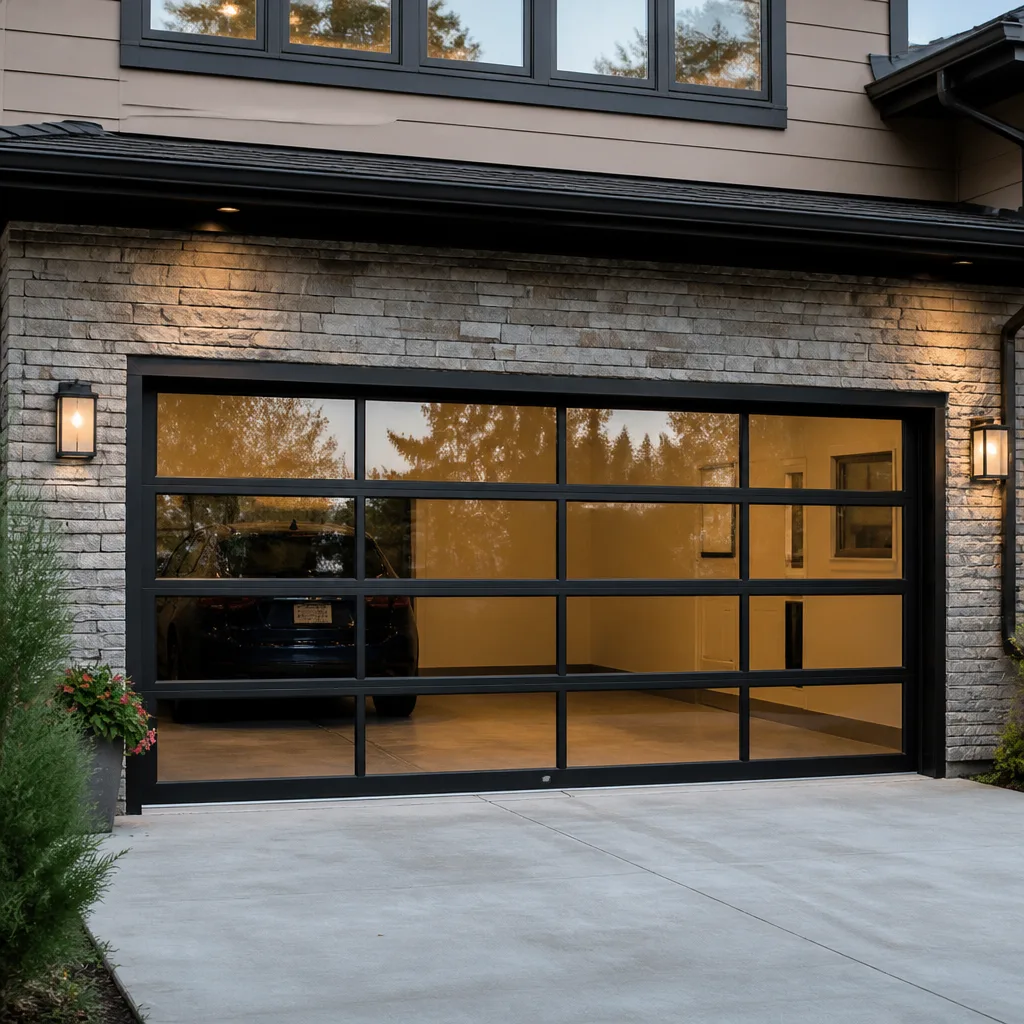 Full-view glass
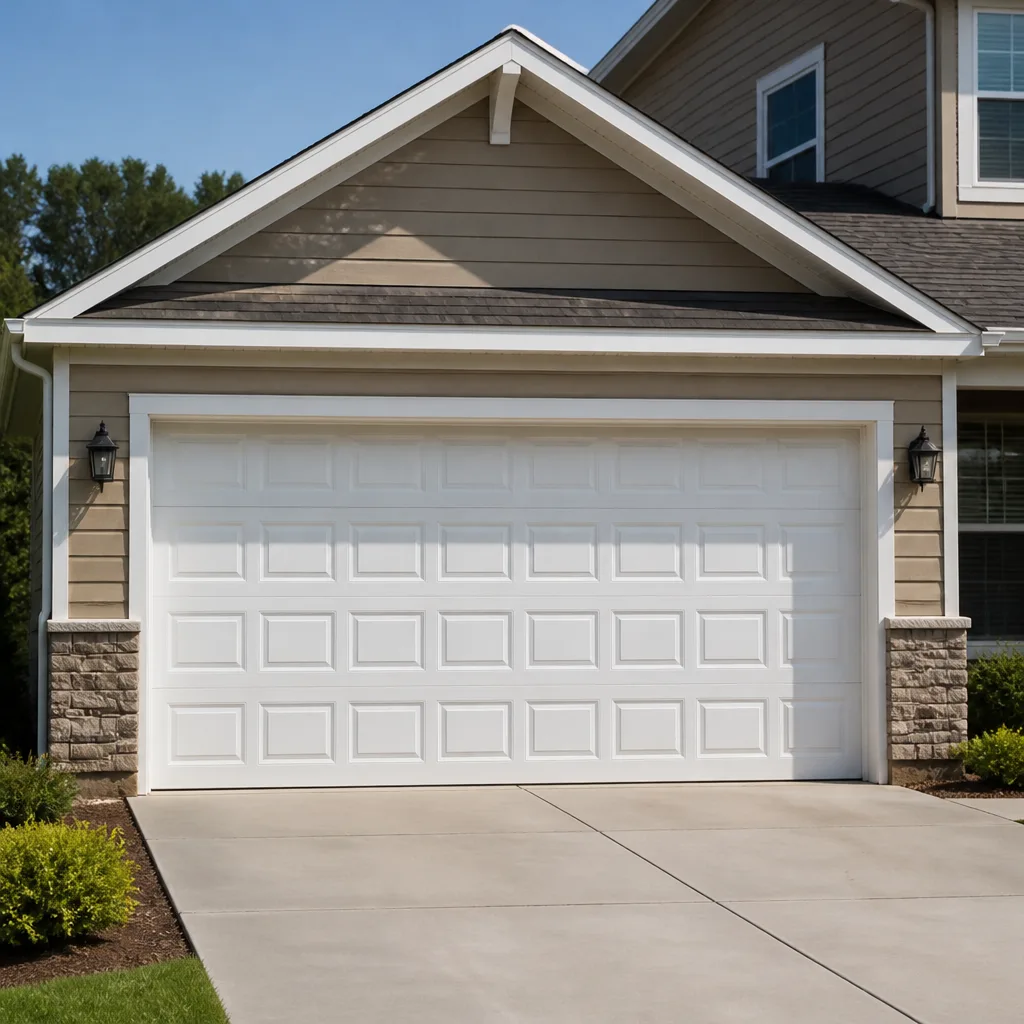 Raised-panel steel
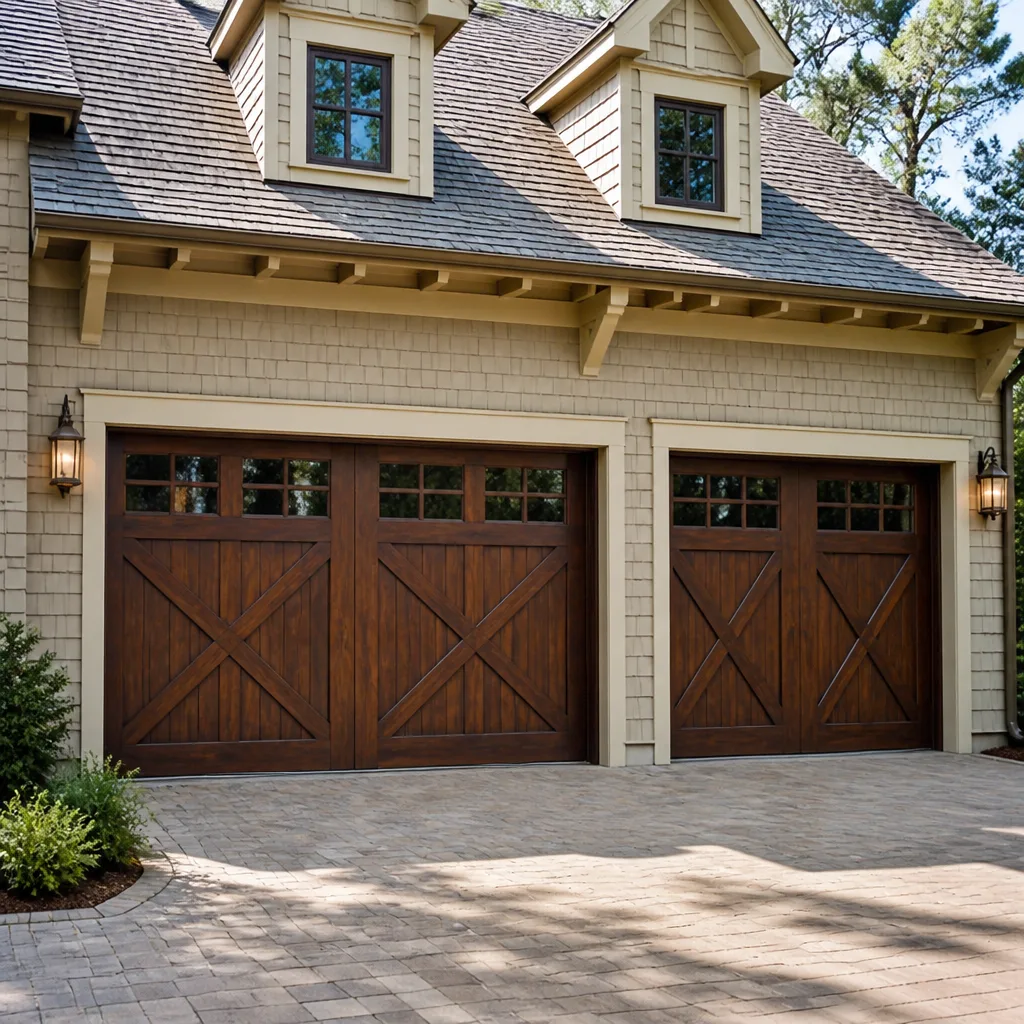 Carriage house
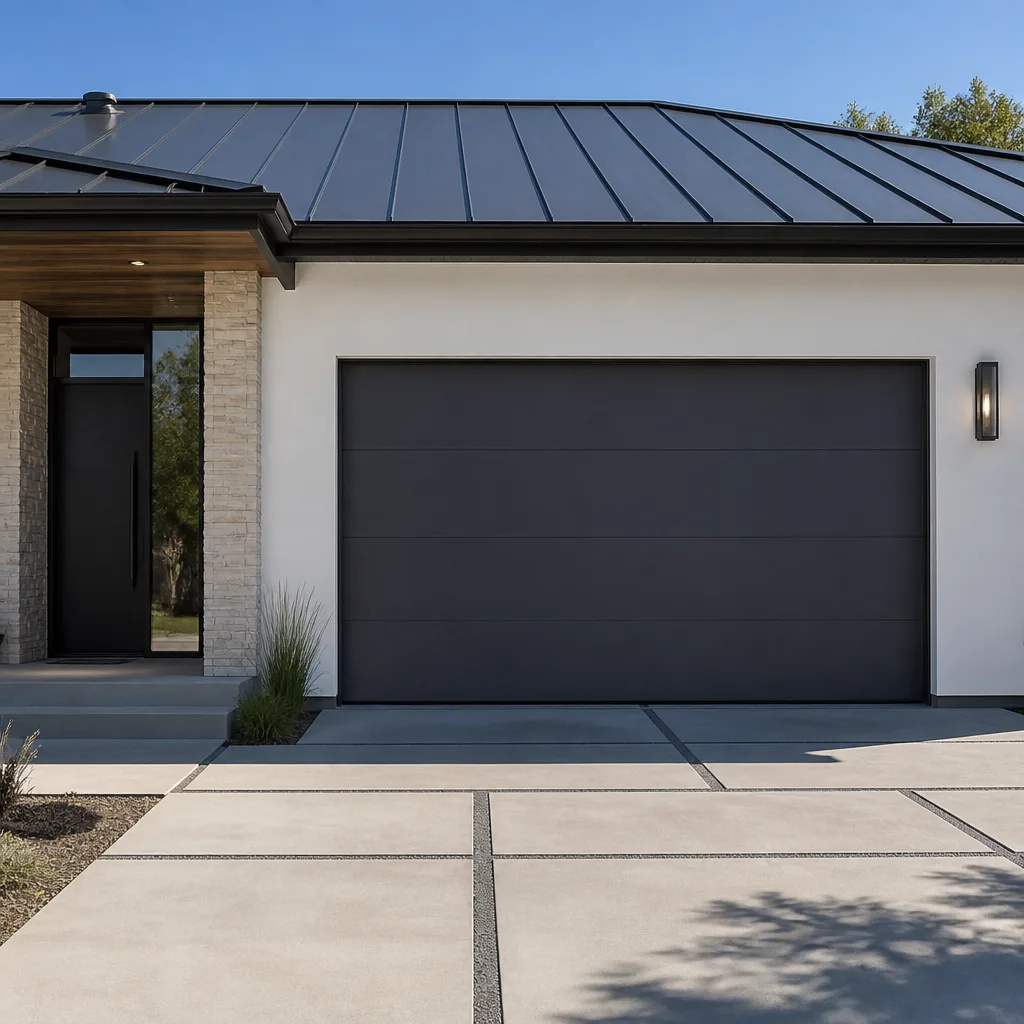 Modern flush
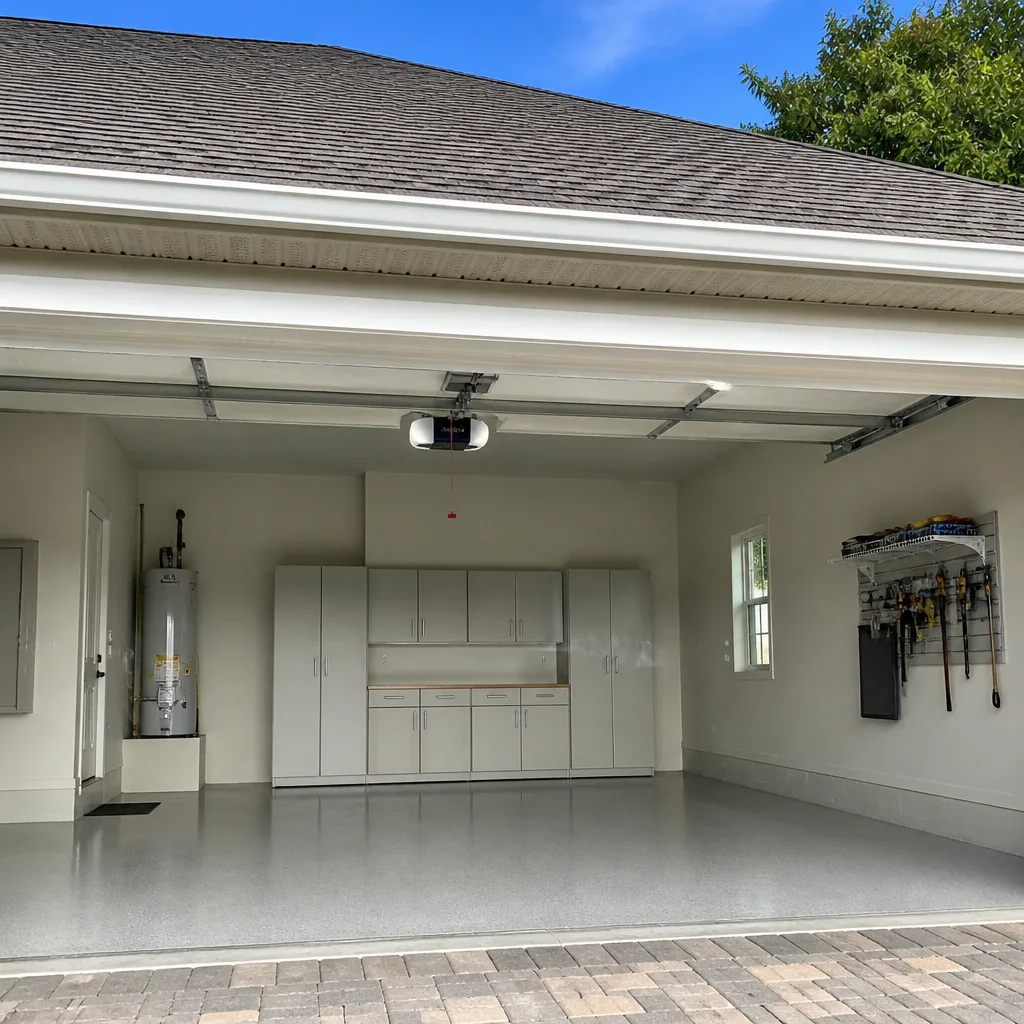 LiftMaster openers
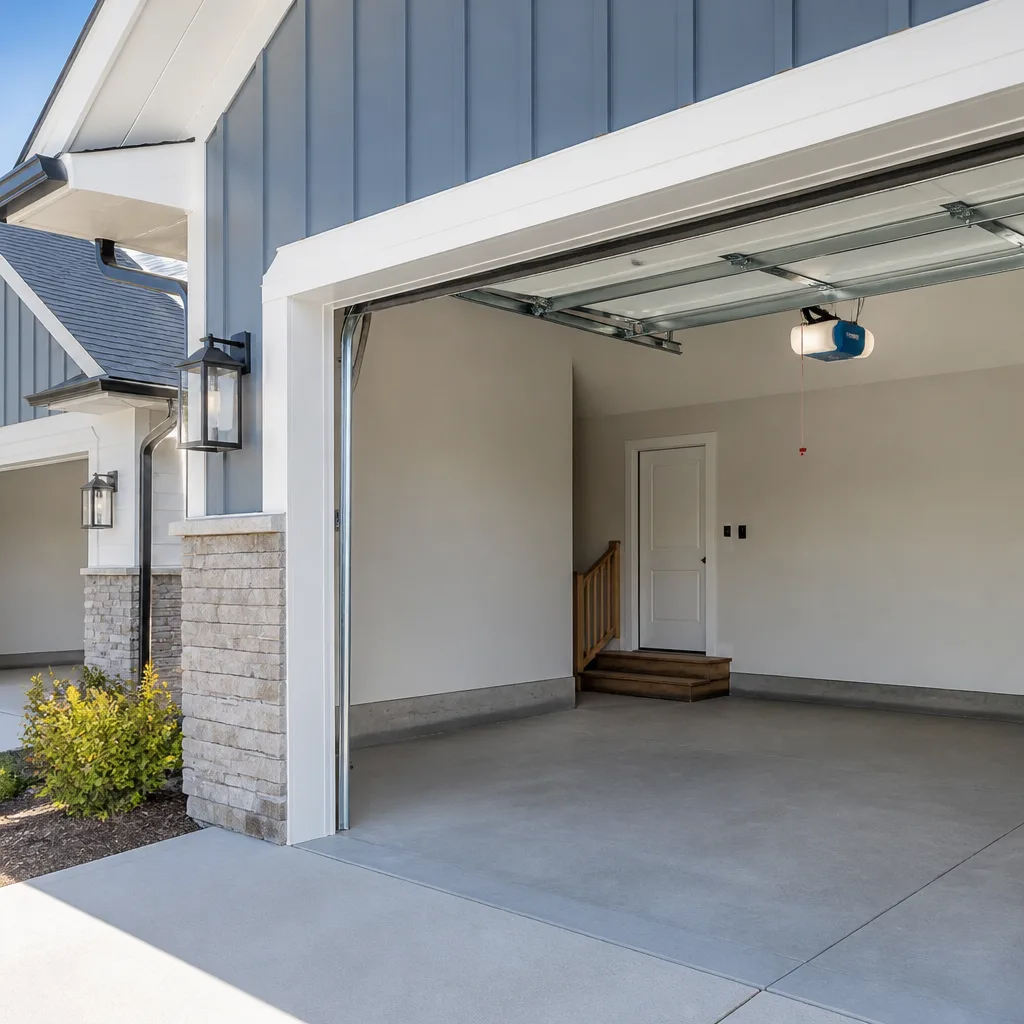 Chamberlain openers
Full 25-point door and opener safety check with every visit - springs, cables, rollers, tracks, and your LiftMaster or Chamberlain opener included
You get a price before we start. It does not change when the pro arrives.
Get your free estimateHow to Hire a Garage Door Contractor in Channelview: A Step-by-Step Guide
Any contractor can say they work on garage doors. Ask them what a torsion spring cycle rating means for your door weight and watch how fast the conversation changes. The uncomfortable truth is that most homeowners in Channelview vet a garage door contractor the same way they’d vet a plumber or a roofer: check the stars, compare a couple of quotes, pick the middle number. That process fails here, because the work isn’t interchangeable. A garage door is a counterbalanced mechanical system with springs under heavy load, an opener timed to a specific door, and safety hardware that has to be tuned, not just installed. A general handyman who added “garage door repair” to his service list last spring can pass every generic hiring check and still get the job wrong. This guide walks you through the questions, verifications, and quote details that separate a true specialist from someone learning on your door.
Quick Answer
To hire a garage door contractor in Channelview, verify the contractor’s insurance and license status in under five minutes, then ask five technical questions about springs, opener programming, and door weight before you accept any quote. A real garage door specialist answers those questions in specifics – cycle ratings, brand-specific programming steps, load calculations. A generalist deflects or gives you a general answer. Get everything in a written, line-itemed estimate before work begins, and never let anyone start without a signed price.
Styles & brands we work with
- Raised-panel steel
- Carriage house
- Modern flush
- Full-view glass
- LiftMaster openers
- Chamberlain openers
Table of Contents
- Specialist vs. Generalist: Why It Matters More Than Any Review Score
- How to Verify a Contractor’s License and Insurance in Under Five Minutes
- Five Technical Questions That Instantly Separate Specialists From Generalists
- How to Read a Garage Door Quote: Line Items That Should Always Appear
- Why Brand-Agnostic Generalists Fail on Chamberlain and LiftMaster Systems
- How to Read Online Reviews Specifically for Garage Door Work
- Spring Work Is Different: Evaluating Safety Standards
- How the Hiring Process Actually Unfolds in Channelview
Specialist vs. Generalist: Why It Matters More Than Any Review Score
A five-star generalist and a five-star garage door specialist are not the same product, even when their reviews look identical. The generalist earned those stars doing dozens of different jobs reasonably well. The specialist earned them doing one class of job, repeatedly, on the same handful of systems. For a leaking faucet, that distinction doesn’t matter much. For a torsion spring under tension holding a door that weighs a few hundred pounds, it matters enormously.
What makes garage door work its own trade is the counterbalance math. Every door has a specific weight, and the springs are rated to that weight. Get the pair wrong by even a small margin and the opener works harder, the door drifts, and the springs wear out early. A specialist reads the door. A generalist guesses at the label.
Here in Channelview, where a lot of homes sit on generous driveways with wide single and double doors, we’re not looking at cookie-cutter installs. Door sizes vary, opener brands are mixed, and plenty of homes still run older equipment that was set up years ago and never re-tuned. A contractor who only sees garage doors in Channelview learns that mix fast. A contractor who sees one garage door every couple of months doesn’t.
Here’s the practical filter. Specialists do three things consistently:
- They diagnose before they quote. They look at the door, the springs, the opener, and the hardware before naming a price.
- They identify brand and model by sight and know what that brand does differently.
- They replace the components that regulate the door rather than patch whatever broke first.
Generalists do the opposite. They quote over the phone, then improvise. If you want the work diagnosed properly the first time, the specialist is the safer call. When you’re ready to book one, our garage door repair team is set up to walk through exactly this kind of assessment.
How to Verify a Contractor’s License and Insurance in Under Five Minutes
Texas has no statewide licensing requirement specifically for garage door contractors, and that single fact is why verification matters more here than in a state that mandates it. What Texas does have is a general contractor environment in which anyone with a truck can advertise. The protections you rely on are insurance and business legitimacy, not a license number. So verification shifts from “check the license board” to “check the coverage.”
Here’s the five-minute routine:
- Ask for a certificate of insurance. Errors and omissions (E&O) plus general liability is the standard pair. Ask for the certificate to be emailed directly from the insurer, not forwarded from a file.
- Call the insurer’s verification number printed on the certificate. Confirm the policy is active and the named insured matches the company on the quote.
- Ask about workers’ compensation. If the contractor has employees on-site, this is what protects you from a claim if someone is hurt at your house.
- Confirm the business entity. A quick check with the Texas Secretary of State confirms the business is registered and active.
- Match the name on the quote to the name on the insurance. A mismatch – say, a quote under one name and coverage under another – is a signal to slow down.
If a contractor can’t produce the certificate within minutes, that’s the answer. Legitimate operations have it on hand. If you’d rather not sort it out yourself, the local pros we connect homeowners with are licensed and insured as their state requires, and that paperwork is available on request. That’s the baseline we’d hold any contractor to in Channelview.
Five Technical Questions That Instantly Separate Specialists From Generalists
This is the section most hiring guides skip. Anyone can look polished on a phone call, but technical answers are hard to fake convincingly over a longer exchange. Ask these five questions before you commit. What you’re listening for is not just correctness but depth – whether the contractor lights up or goes quiet.
1. “What is a torsion spring cycle rating, and what rating did you install on my door?”
A cycle is one full open-and-close of the door. Springs are rated by how many cycles they’re built to survive. A good answer references a specific cycle rating (for example, standard vs. extended ratings) and explains how the rating connects to the door’s weight and how often it’s used. A weak answer treats all springs as the same and skips the rating entirely.
2. “How do you match spring size to my door?”
A specialist talks about door weight, wire size, and winding. A generalist says something about “the standard size.” If they don’t weigh the door or reference the door’s weight, the springs they install may be too strong or too weak for the door.
3. “My opener is a [brand]. How do you program it after a replacement?”
Programming varies widely. Chamberlain and LiftMaster openers use one pairing sequence; Genie uses another; older Craftsmans use a third. A specialist knows the difference and asks which brand and model you have before quoting. A generalist may not know the opener has to be re-paired at all. That difference is why we describe ourselves as a crew that works on your brand, not around it.
4. “What safety features do you check when you test the door?”
The mechanical safety tests are the reverse test and the photo-eye or safety-eye test. A specialist names both and tests both. A generalist won’t describe them at all.
5. “What will happen on the job and how long will it take?”
Answers here should be concrete: what parts will be removed, what will be installed, what you’ll see when the door is tested, and roughly how long the work will take. Vague answers about “a few things” are a red flag.
If the contractors you call can’t answer these, it’s worth calling a specialist who can. Our garage door spring repair team can talk you through the technical side of a broken spring on the phone, and that specificity is the point.
How to Read a Garage Door Quote: Line Items That Should Always Appear
The written estimate is where a good contractor and a fast operator part ways. A specialty quote for a garage door job in Channelview should read like a technician wrote it. That means specific parts, specific quantities, and a clear price that doesn’t leave room for an upsell once the work begins. If the quote is one line – “garage door repair: $X” – the contractor has skipped the diagnosis.
What should be itemized on the quote:
- Parts named specifically: springs by type and quantity (for a spring job, one spring is priced individually and a matched pair is roughly double that), rollers, cables, hinges, brackets, opener motor or logic board, safety sensors, weather seal.
- Labor shown separately from parts, or at least a labor line that isn’t folded into a single total.
- Disposal and cleanup. A real garage door job removes the old parts. Ask where they go.
- Unforeseen-items language. Springs can reveal a bent track or a frayed cable once loaded. A serious quote states how surprises will be handled, and that no extra work starts without your approval.
Substitutions that should make you pause:
- “Standard spring” without a cycle rating or size.
- Any single price for a “spring replacement” without stating one spring or a pair.
- A replacement opener without stating the brand and model number that will be installed.
- A quote that includes a hidden service fee or a dollar figure that doesn’t match what the contractor said on the phone.
On pricing itself: in most Channelview-area markets, spring repair for a single spring typically runs in the range of about $180 to $340, with a matched pair roughly double that. Opener repairs commonly fall in the $120 to $300 range, and full door replacements vary much more widely based on size and material. The written estimate is what sets the final price. Estimates through our team are free and come before any work begins.
Why Brand-Agnostic Generalists Fail on Chamberlain and LiftMaster Systems
Garage door openers are not a universal standard. They’re a handful of brands with their own programming sequences, logic boards, and accessories. LiftMaster and Chamberlain (which share design lineage) program famously differently from Genie, and older Craftsman units carry their own quirks. When a generalist installs a new opener or replaces a logic board on a Chamberlain, the physical wiring may be fine but the safety-reversal programming is often off. That mis-programming shows up later as a door that reverses at the wrong moment, or a remote that won’t pair, or a warning light that stays on.
Brand-specific programming also affects warranty. If the manufacturer’s programming or installation instructions aren’t followed, warranty coverage can be reduced or refused when a claim is filed. A generalist may not know the sequence well enough to guarantee it was run through properly, and that risk lands on you after the fact.
This is where a specialist earns their keep. When you call us and describe a LiftMaster opener that’s not reversing properly, we’re already narrowing down to specific causes and specific tests. When you describe a Genie opener that’s not opening with the remote, the diagnostic tree is different. The brand names in that description – LiftMaster, Chamberlain, Genie, Craftsman, plus the door brands like Clopay, Amarr, Wayne Dalton, and Raynor – each point to a different answer.
If you’re not sure which brand you have, the opener housing usually has a label on the back or under the light cover. If you can read that label, you can tell a specialist what you’re working with, and that conversation will go very differently than it would with a generalist. Our garage door opener repair team is exactly the specialist call that label deserves.
How to Read Online Reviews Specifically for Garage Door Work
Star ratings are a blunt instrument. For garage door work, the useful signal isn’t whether someone gave five stars. It’s what they said the contractor actually did, and whether those details sound like real garage door work.
Read reviews for these specific things:
- Brand mentions. A useful review names the brand or model that was repaired or installed. That tells you the contractor was specific about parts, not generic.
- Timing. Did the reviewer describe a diagnosis before a quote? Did the contractor explain what happened and why?
- Repair scope. Did the reviewer say the contractor replaced springs, or fixed a broken opener, or re-aligned the door? Specific repairs are a strong sign the reviewer was actually handled by a garage door specialist.
- Quote accuracy. Did the reviewer say the final price matched the quote? This is the biggest signal of a trustworthy operation.
- Follow-up. Did the reviewer describe a return visit for an adjustment, or a phone call that resolved a programming issue?
What to discount:
- Reviews that only say “great service, fast, professional” with no detail about what was done.
- Reviews clustered at the same exact date, or with similar phrasing across multiple reviewers.
- Reviews that complain about a price mismatch, a missing part, or a job that “worked for a while.”
When you read reviews for a Channelview contractor, look for reviews that sound like a garage door specialist. That’s the pattern that predicts a good hire.
Spring Work Is Different: Evaluating Safety Standards
A garage door spring is a dangerous component under stored tension, and that’s the single most important reason to hire a specialist rather than a generalist. We won’t walk you through a DIY spring replacement, and any contractor who minimizes the danger is telling you something by doing so. What you should evaluate is how the contractor handles safety – not just the work.
Look for these specifics in the conversation:
- Do they talk about securing the door before touching the springs? Safety starts with locking the door in place and releasing the opener’s tension safely.
- Do they name the winding bars and the tension-handling sequence? Any spring job involves a controlled release, not a guess.
- Do they check the safety tests after the repair? The photo-eye and reverse test should be part of the handoff.
- Do they warn you not to operate the door in certain failure states? A broken spring can leave the door unsupported. The contractor should tell you what not to do while you wait for service.
We strongly recommend that you never attempt a spring replacement yourself, and never let a generalist take it on without you seeing their spring-repair experience. If you call us and describe a snapped spring, we’ll tell you what’s happening mechanically and what to leave alone until a technician arrives.
How the Hiring Process Actually Unfolds in Channelview
The hiring process for a garage door job in Channelview tends to run in a predictable sequence, and knowing it helps you move faster. What follows is the process, from first call to final check.
- First call. You describe the symptom and the brand if you know it. A good contractor asks which brand and model of opener and door you have before talking about price.
- Photo or in-person assessment. Most jobs need someone to see the door – especially spring, cable, and opener problems. Opener programming questions often resolve faster with a photo of the label.
- Diagnosis. A specialist walks through the diagnosis: what failed, what’s at risk, and what a repair involves.
- Written estimate. You get a line-itemed price before any work begins. No fee is charged for the estimate.
- Scheduling. If the job is a repair, we answer 24/7 and dispatch from 7am to 7pm, Sunday through Friday. Closed Saturdays. Installation and replacement work is measured and scheduled.
- On the job. The technician works through the repair, tests the door and opener, and confirms the writing on the quote matches the final price.
Same-day repair is realistic for most non-installation jobs when you call during dispatch hours. Call (855) 658-4106. We answer 24/7. Fast dispatch from 7am to 7pm, Sunday through Friday.
Common Mistakes to Avoid
- Skipping the insurance check because “they seemed professional.” A friendly phone call proves nothing. Ask for the certificate and confirm it with the insurer.
- Choosing the middle quote because it sounds cheapest. The middle quote isn’t inherently safer – it’s only safer if the line items show real diagnosis. Look at what’s actually being replaced, not just the total.
- Accepting a phone quote for a spring repair. Springs are matched to the door. A contractor who quotes a spring job without seeing the door hasn’t done the diagnosis.
- Letting a generalist touch a Chamberlain or LiftMaster opener without brand experience. Programming mistakes here are common, and they can cost you warranty coverage.
- Paying a deposit before a written estimate. No work starts, no money changes hands, until the estimate is signed and the price is agreed.
- Reading reviews for the wrong signal. A five-star cluster of “great service, fast” reviews tells you very little. Look for reviews that name parts and brands.
- Not asking whether the contractor works exclusively on garage doors. A generalist who “also does garage doors” is spread across many trades. A specialist isn’t.
See the difference
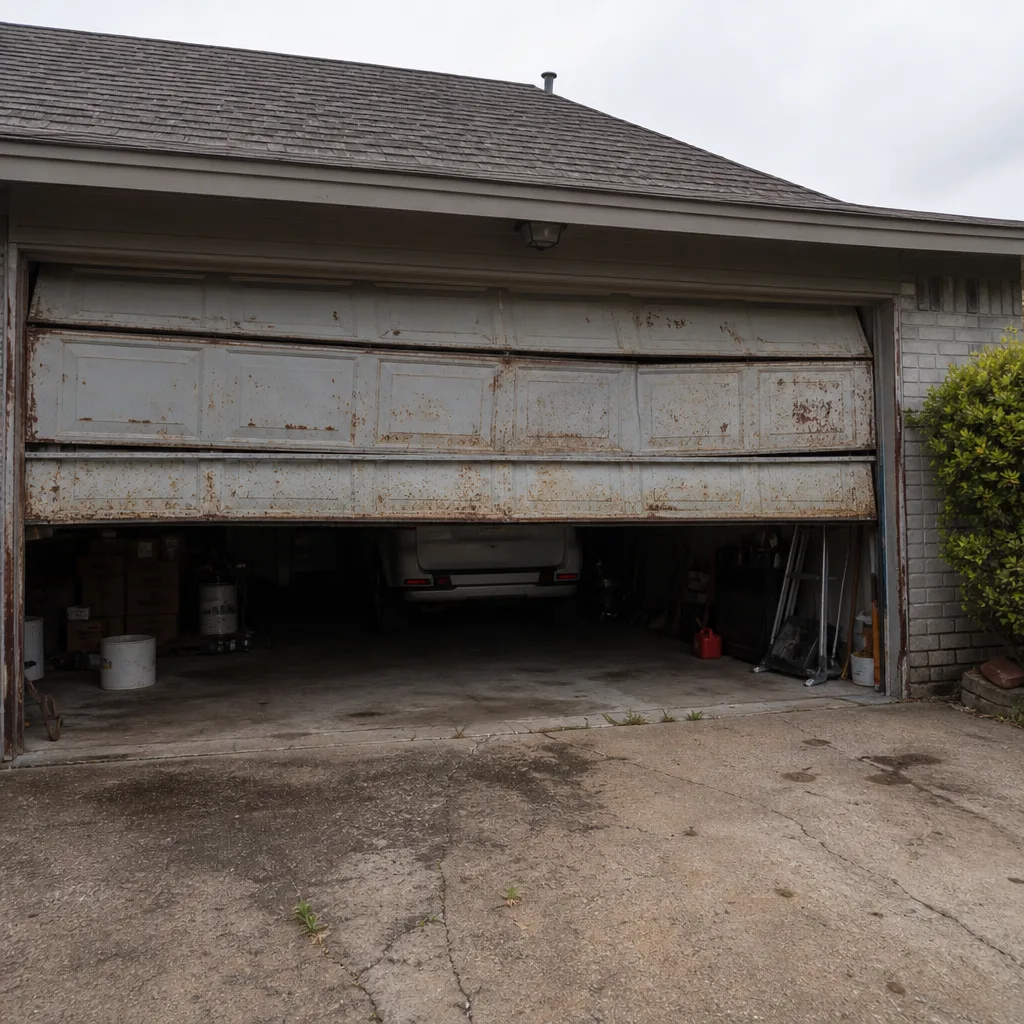 Before
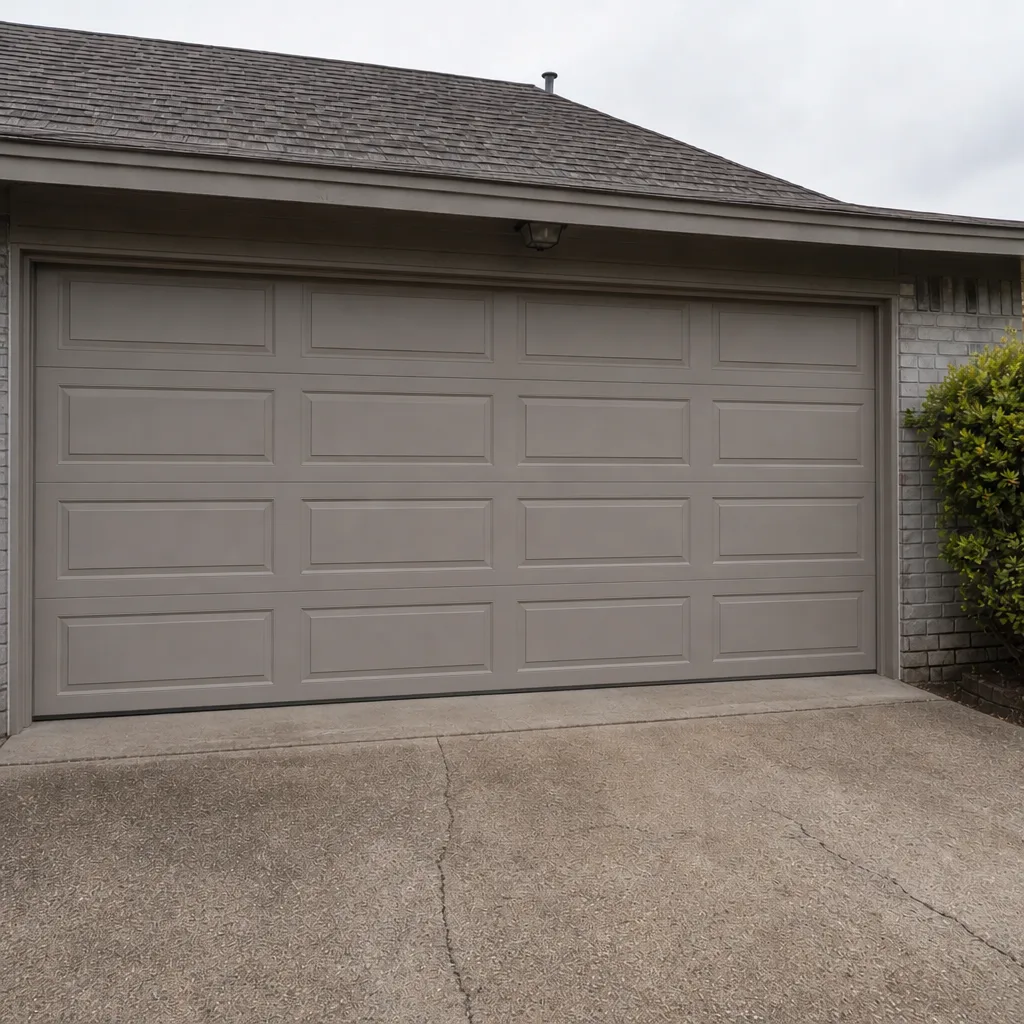 After
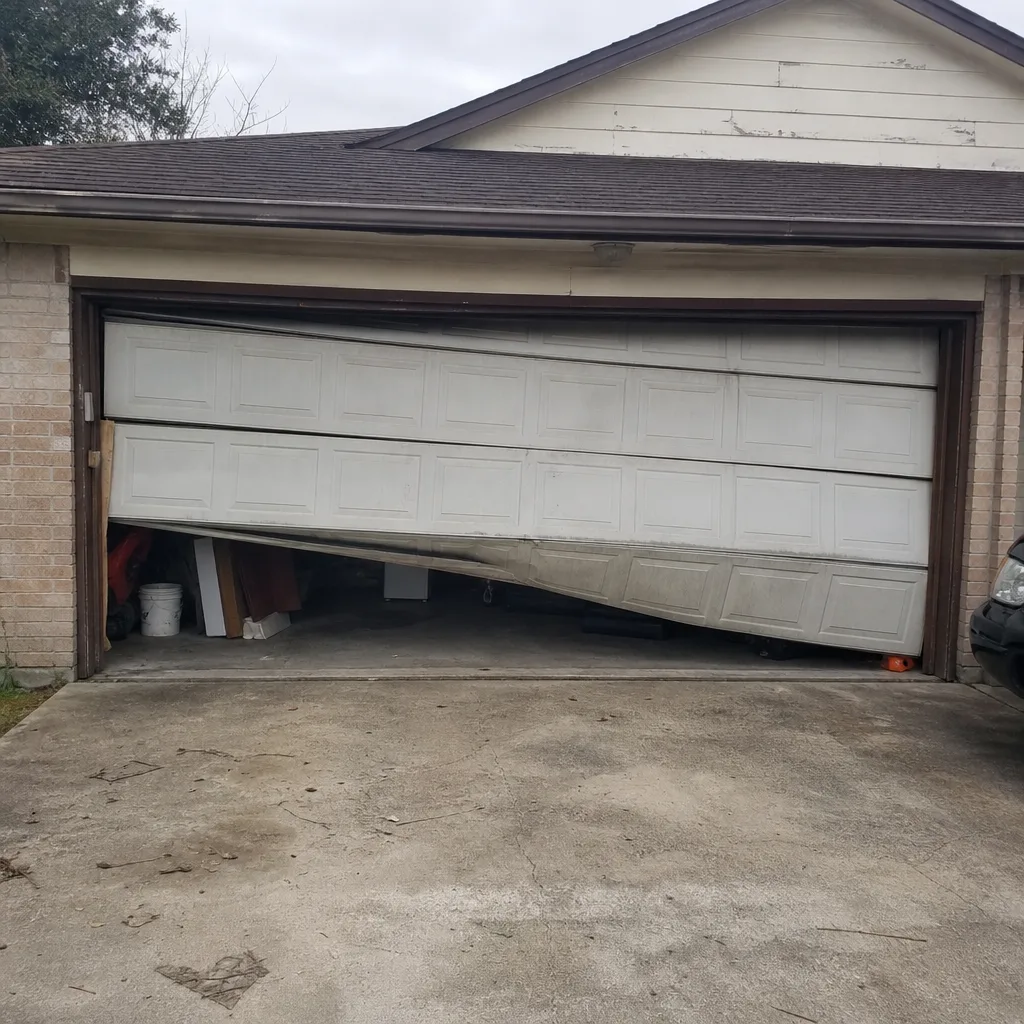 Before
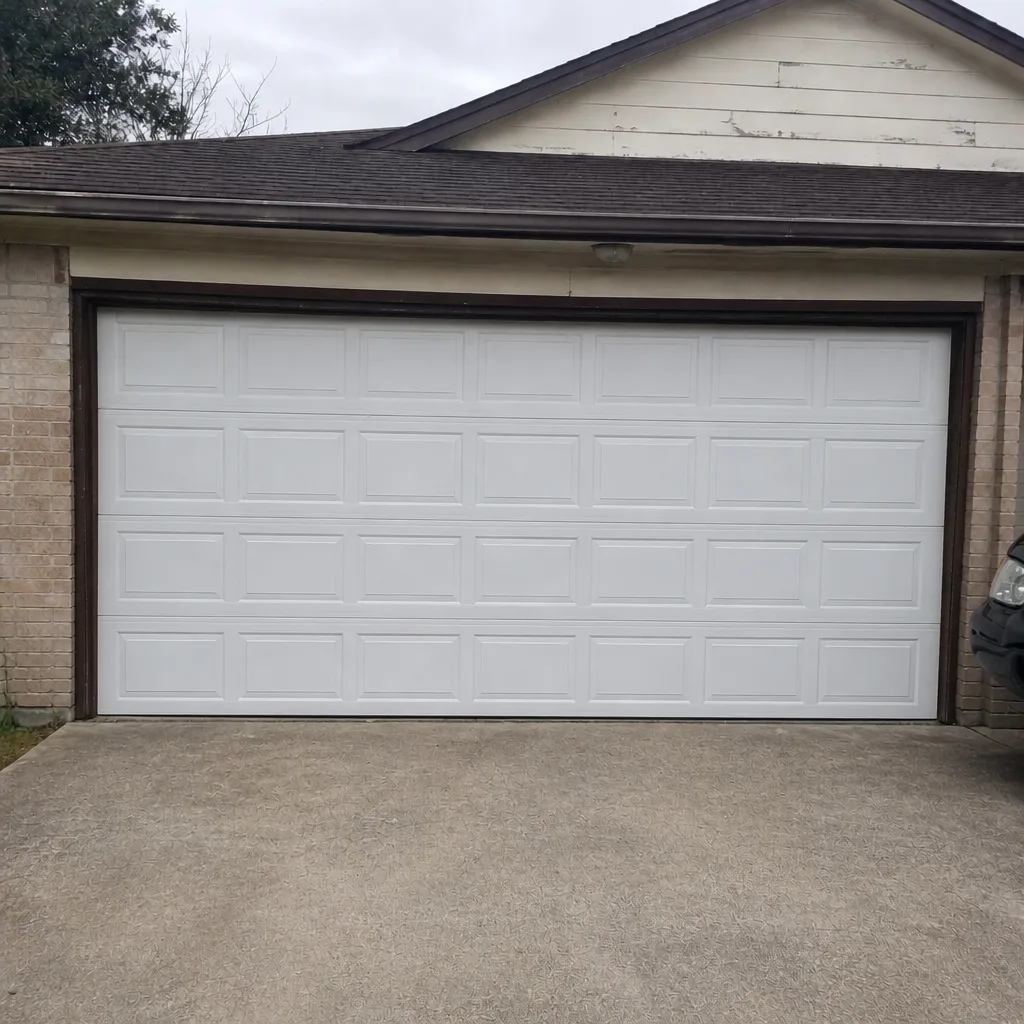 After
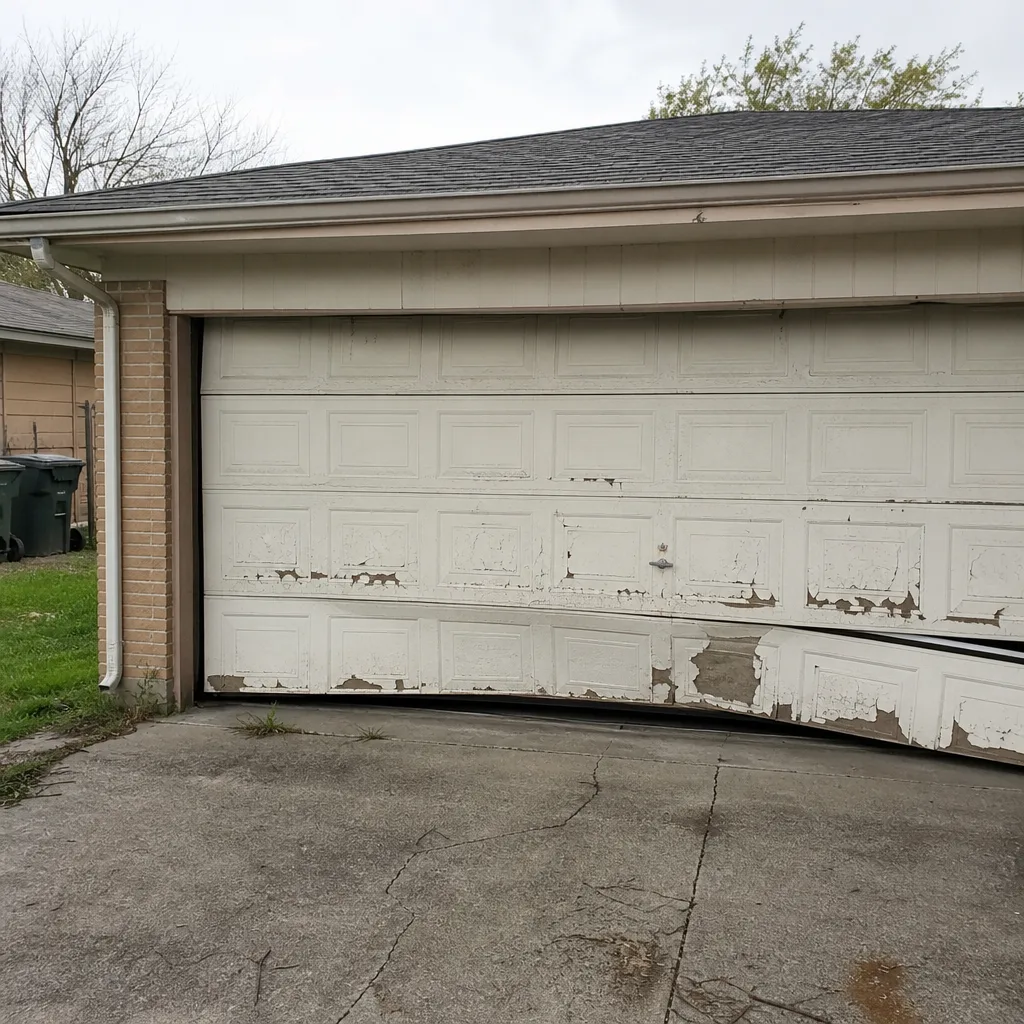 Before
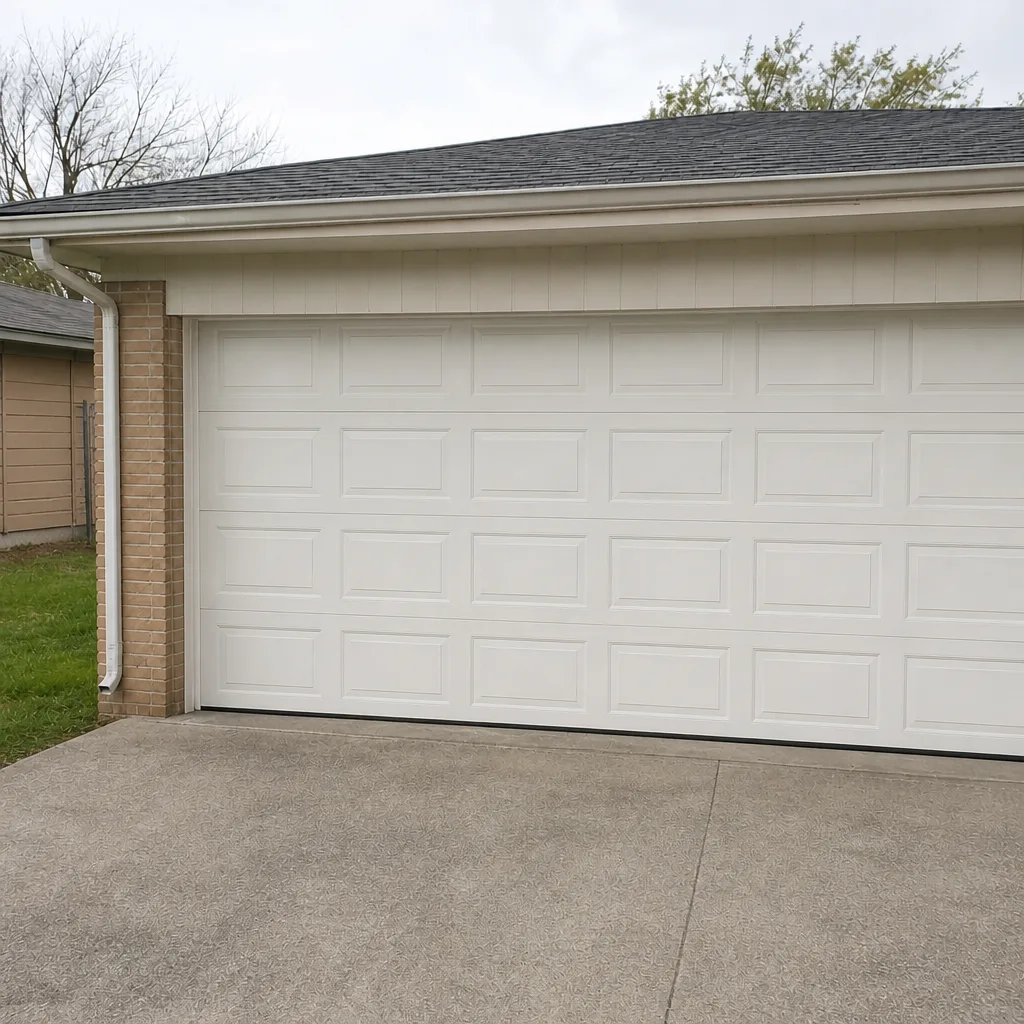 After
When to Call a Professional
Some signs are obvious – a snapped spring, a door that won’t open, a remote that no longer pairs with the opener, a door that reverses on its own or won’t close all the way. Other signs are subtler and worth a call anyway: a door that bounces, a loud grinding or snapping noise, a door that opens unevenly, a light on the opener that flashes instead of behaving normally, or springs that look separated or bent. Springs, cables, and openers are the parts most likely to leave you stuck, and each has a diagnosis that a specialist runs in minutes. We’d rather you call early than after a component fails completely. Channelview Garage Door Repair Pros offers free estimates in Channelview – call (855) 658-4106. We answer 24/7, with fast dispatch from 7am to 7pm, Sunday through Friday.
Frequently Asked Questions
Single-spring repair in the Channelview area typically runs about $180 to $340, and a matched pair usually costs roughly double that because the springs are replaced together. The written estimate sets the final price, and estimates are free.
Same-day repair is often available for non-installation jobs during dispatch hours. Call (855) 658-4106 and describe the symptom and your opener brand. We answer 24/7, with fast dispatch from 7am to 7pm, Sunday through Friday.
No. The written estimate is agreed before any work begins, and the price you sign is the price you pay. If the diagnosis reveals additional damage, we discuss it with you and get your approval before anything extra is done.
The local pros we connect homeowners with are licensed and insured as their state requires, and that documentation is available on request. Texas doesn’t issue a dedicated garage door license, so insurance verification is the strongest proof of legitimacy here.
Hire a specialist. A generalist who added garage doors to their service list can handle basic repairs but often misses brand-specific opener programming and spring weight matching, both of which matter for safety and warranty. A specialist diagnoses the door and the opener system as one unit.
Yes. We work on LiftMaster, Chamberlain, Genie, Clopay, Amarr, Wayne Dalton, Craftsman, and Raynor equipment, which covers the vast majority of doors and openers found on residential driveways. If you’re not sure which brand you have, tell us what you see on the label and we’ll help identify it.
The Bottom Line
The biggest hiring mistake in Channelview isn’t skipping the license check. It’s assuming that a contractor with good reviews and a reasonable quote is the same as a garage door specialist. They’re not. Verify the insurance, ask the five technical questions, insist on a line-itemed written estimate, and check whether the contractor knows your brand well enough to program it correctly. Our technicians have up to 8 years of experience and work exclusively on garage doors – springs, openers, and panels – across the brands you’re likely to own. When you’re ready to get the door looked at, call (855) 658-4106 for a free estimate. Estimates are free, the price is set per job, and the written estimate sets the final price. Visit Channelview Garage Door Repair Pros to see how we approach the work.
Written by the team at Channelview Garage Door Repair Pros.